
Dental Bridges – South Windsor, CT
Flawlessly Replace Consecutively Missing Teeth

Having consecutively missing pearly whites can make daily oral habits more difficult for you, such as eating comfortably, talking fluently, and smiling confidently. Fortunately, our team at South Windsor Dental can restore the look and function of your smile with personalized dental bridges in South Windsor. Read on to learn what you can expect from this treatment, and feel free to reach out to us today if you have any questions!
What Is a Dental Bridge?

A dental bridge is a restoration treatment that’s designed to replace a consecutive amount of missing teeth. This can involve anywhere from one to four missing teeth in a row. The restoration consists of two crowns that are directly anchored onto the remaining teeth on either side of the gap, or on dental implants depending on the kind you choose. Your bridge can also be made from different natural-looking and durable materials, such as ceramic or porcelain.
Types of Dental Bridges

There are several kinds of bridges to consider based on the number and location of your missing teeth. These types include:
Traditional Dental Bridge
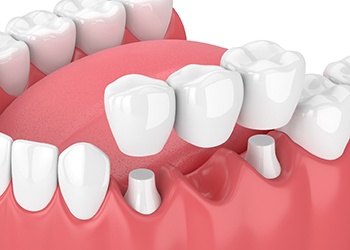
This treatment option is ideal for those who still have strong and healthy teeth on either side of the gap. However, before these pearly whites can be used, we’ll need to prepare them to fit your bridge properly. This will involve removing a small amount of your enamel to create space for your restorations. We can typically complete this process in just a few visits, and you’ll be able to enjoy a stable and reliable bridge for years to come.
Implant Bridge
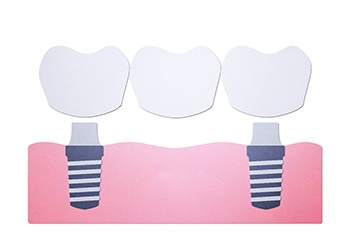
If natural abutment teeth aren’t an option, then we can provide dental implants first as an alternative. These titanium posts will be surgically embedded into your jawbone to act as your new roots. Your dental implants will be able to effectively support around three to four consecutive missing teeth. Additionally, the posts themselves can preserve your jawbone, meaning you can enjoy a fully restored smile for a lifetime!
The Benefits of Getting a Dental Bridge

Here are several important benefits you’ll be able to enjoy when replacing multiple missing teeth with a dental bridge:
- A natural-looking restoration that blends with the rest of your smile.
- Preserve the alignment of your remaining teeth.
- Boosts oral health and makes proper dental hygiene much easier.
- Maintain your jawbone structure with an implant dental bridge.
- A long-lasting solution that can last around 15 years for traditional dental bridges and over 30 years for implant-supported ones.
Dental Bridge FAQs
How Long Should a Dental Bridge Last?
Dental bridges from our South Windsor team are designed for durability. With proper care, your restoration may last for 5 – 15 years. In some cases, they last even longer!
A number of factors can affect the longevity of your bridge. For example, bridges toward the back of the mouth face more pressure than those in the front, so they may not last quite as long. Implant bridges tend to last a long time because they are anchored in the jawbone and have outstanding strength and stability.
Your own habits will also affect how long your bridge lasts. Our team can provide tips to help you keep your restoration in good shape. You might need to modify your diet. A thorough oral hygiene routine and regular checkups are also important.
Is a Partial Denture the Same as a Bridge?
Partial dentures are sometimes called “removable bridges,” but that is a bit of a misnomer. A bridge is fixed in your mouth and should only be removed by a dental professional. A partial denture, on the other hand, has small clasps that attach it to nearby natural teeth; it is easily removable for daily cleaning.
Another difference between these types of prosthetics is that a partial denture can replace teeth at multiple places throughout a dental arch, whereas a bridge can only replace missing teeth that are adjacent to one another.
How Many Teeth Can a Dental Bridge Replace?
A traditional dental bridge is usually used to replace just one or two teeth in a row, though in some circumstances, they can replace more. The longer a bridge is, the less stability and strength it has, so shorter bridges are preferred.
Implant bridges are stronger than traditional ones, and they can often replace more teeth. In fact, a full implant denture is sometimes called a bridge.
Can Dental Bridges Be Whitened?
Dental bridges may look like natural teeth, but they are made of different materials. Tooth enamel is porous, and teeth whitening agents can penetrate it to break up pigment molecules. Bridges are made of non-porous materials, so they do not respond to whitening formulas.
If you want to brighten your smile, you may choose to do it before you get your bridge so your restoration can be shade-matched to your smile. If you already have a bridge and it has become discolored, you might need to get it replaced. Or, we might be able to polish it to remove minor surface stains.
Do Dental Bridges Look Natural?
Our practice often uses bridges that are made from tooth-colored materials, such as various types of ceramic. They look almost identical to real tooth enamel, so you can be confident that onlookers will not be able to quickly tell that you are missing some of your natural teeth.