
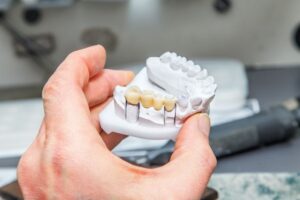
Dental bridges offer a reliable and sturdy form of tooth replacement. While they do not last forever, they can last a very long time — perhaps 10 – 15 years or longer! In some cases, though, they fail prematurely. What could cause that to happen, and is there anything you can do to prevent such an unfortunate outcome? This blog post offers helpful guidance.
Common Causes of Dental Bridge Failure
In rare cases, a dental bridge fails due to issues with its design or workmanship. More often, though, the failure is linked to things that you, as the patient, have some control over. For example, your restoration might suffer damage, fall off, or otherwise fail if you:
- Neglect proper oral hygiene: Food particles and bacteria might sneak beneath the bridge and damage its supporting teeth.
- Accidentally damage your bridge: If you grind and clench your teeth, you might accidentally break or crack your restoration. If you chew on hard objects or do not wear a proper mouthguard during sports, these habits could also cause serious harm.
- Do not keep up with routine dental care: At regular cleanings and exams, your dental team should check your bridge and offer services and advice to help you keep it in good shape for the long haul. Neglecting these appointments is risky for both your natural oral tissues and any restorations you have.
Help Your Bridge Last Longer
You may be able to significantly extend the lifespan of your bridge if you:
- Stick to a good oral care routine: Brush twice a day and floss once a day. Use a floss threader or water flosser to clean the tight space underneath your bridge.
- Attend regular dental appointments: Make it your goal to have a cleaning and exam twice a year.
- Take precautions to prevent damage: Wear a mouthguard if you grind your teeth or play sports. You should also avoid biting on hard objects like pen caps, ice, or bone-in meats.
- Notice changes: If you notice that your bridge has started to feel different in your mouth or has signs of damage, see your dentist. In some cases, bridges can be repaired. In other cases, they need to be replaced.
Dental bridge failure is possible, but it is not something you need to be overly worried about — especially if you adhere to good habits and follow advice from your oral care team!
Meet the Practice
Dr. Sara Curcio graduated from dental school 20 years ago. Since then, she has continually sought to expand her skills and provide compassionate, personalized care to the South Windsor community. If you have questions about how to care for your smile — including bridges or other restorations — our team would be pleased to speak with you. To schedule an appointment, contact our office at 860-644-2476.